
Beyond “Luxury”: What Should Premium Real Estate in Accra Actually Deliver?
When every development is called luxury, quality must be measured by design, construction, management, and how well a building performs after handover.
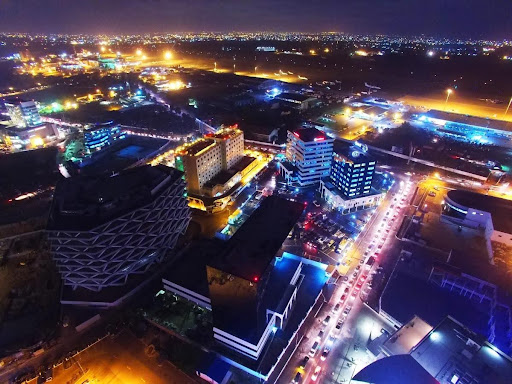
Almost every new apartment in Accra is luxury. At least, according to the billboard.
Drive through Airport Residential, Cantonments, Ridge, Labone or almost any fast-growing part of Accra and the vocabulary becomes familiar very quickly.
Luxury apartments. Luxury residences. Luxury living. Luxury redefined.
Add a rooftop pool, a marble-effect lobby and perhaps the word “Hills” somewhere in the name, and apparently we have arrived.
But have we?
The problem is not that Accra has too much luxury. The problem is that “luxury” has become such a convenient word that it increasingly tells the buyer very little.
When every development is luxury, the word stops being a standard and starts becoming a marketing adjective.
And perhaps the more useful conversation for Ghana's real estate industry is no longer, “How luxurious is this development?”
It is:
How good is it?
Luxury is easy to promise. Quality is harder to deliver.
A development can look exceptional in a render.
Beautiful lighting. Expensive furniture. Perfectly polished surfaces. An infinity pool reflecting an impossibly blue Accra sky.
But homeowners do not live in renders.
They live in buildings.
They experience the lift on a Monday morning. They notice whether the plumbing works properly. They feel the quality of the doors, windows and fittings. They discover whether water pressure reaches the upper floors consistently. They see how corridors and common areas age.
And after a few rainy seasons, they find out whether the building was actually built as well as it was marketed.
That is where the difference begins.
The true test of a premium development does not happen at launch.
It begins after handover.
A genuinely good development should arguably become more convincing once people begin living in it, not less.
A prime address does not automatically create a premium building
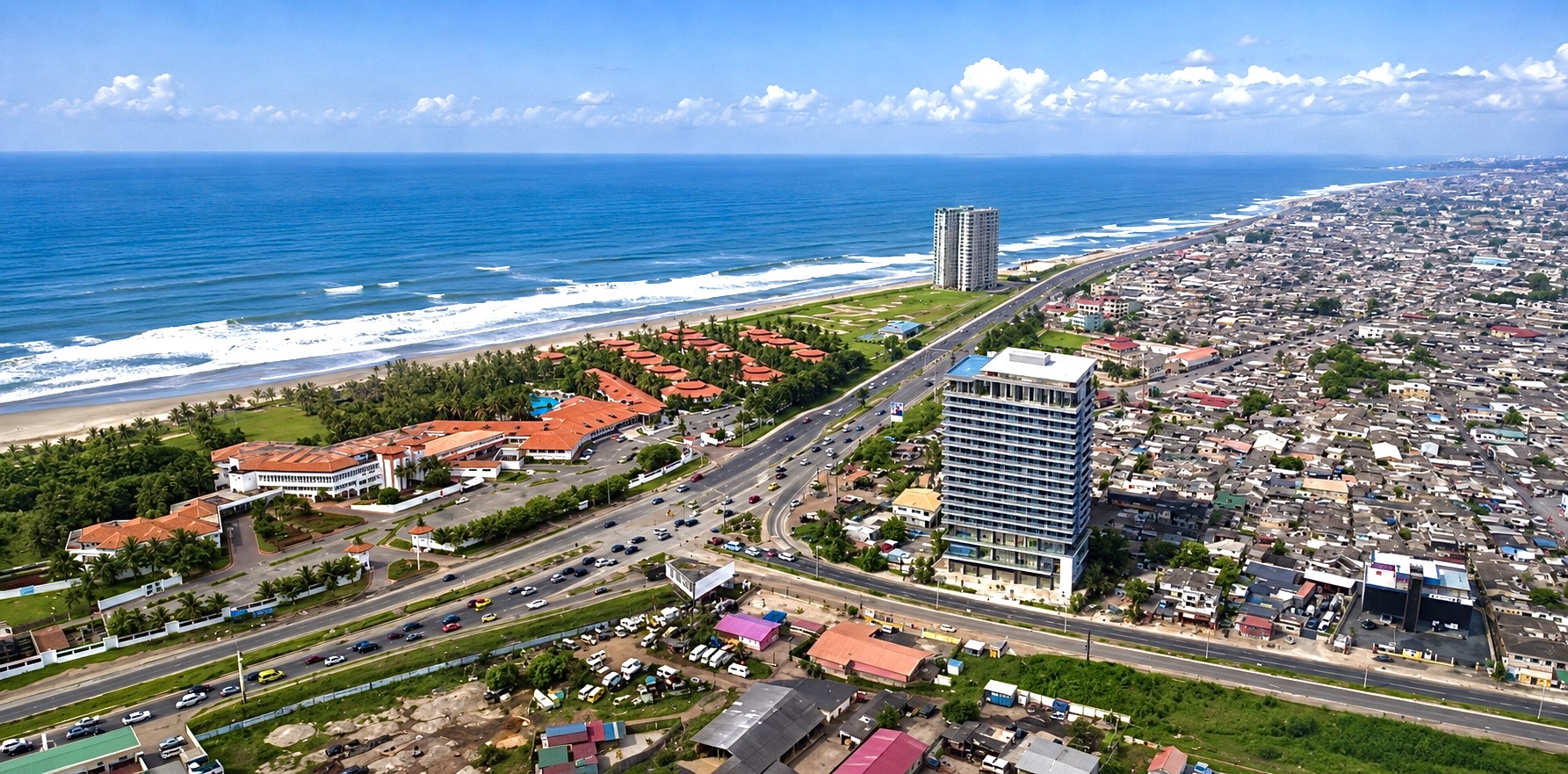
Location matters enormously in real estate. It always will.
But location alone cannot carry the entire burden of quality.
A building does not become exceptional simply because it stands in Cantonments, Airport Residential, Labone or Ridge.
Nor does painting the walls white suddenly turn construction into craftsmanship.
Premium real estate should be something buyers can examine beyond the postcode.
Who designed it?
Who is building it?
What construction standards are being applied?
What materials are being specified?
How functional are the floor plans?
What will the common areas look like five years after completion?
How will the building be maintained?
What will homeowners actually receive in exchange for their service charges?
These questions are far less glamorous than a billboard.
They are also far more important.
Management is part of the architecture
We often speak about a building as though development ends when construction ends.
It doesn't.
A beautifully constructed property can lose its appeal surprisingly quickly when it is poorly managed.
A premium residence with unreliable lifts, deteriorating common areas, inconsistent security, poorly maintained landscaping or neglected amenities eventually stops feeling premium regardless of what the original brochure promised.
This is why property management should not be treated as an afterthought.
And neither should service charges.
The goal should not necessarily be to make service charges artificially cheap. Maintaining a high-quality residential development costs money.
The real question is whether those charges are reasonable, transparent and commensurate with the service being delivered.
Residents should be able to see where value is being created.
Good management protects the experience of living in a development.
More importantly for investors, it helps protect the asset itself.
We should expect more from the people actually building our homes
There is another part of the conversation that does not receive enough attention: the contractor.
In property marketing, enormous attention is placed on developers, architects and sales brands. Yet the organisations responsible for physically executing the building are fundamental to what the buyer eventually owns.
A contractor's technical capability, systems, engineering experience and record of delivery matter.
This thinking informs the approach across the Oriental Royal Estates Group.
At Labadi Beach Apartments, for example, the development is being delivered by our group company, Bluewhale Construction & Industrial Ltd., working with China Railway Construction Corporation and CRCEG as construction partners.
For us, the significance is not simply having recognisable international organisations attached to a project.
It is the principle behind the partnership:
If we expect a building to endure, then the quality and capability of those entrusted to build it must matter.
The construction team should not simply help sell the development.
It should help justify confidence in it.
“Global standard” does not mean copying Dubai
Accra should absolutely aspire to buildings that can stand confidently beside developments in cities such as Singapore, Shanghai, Dubai and New York.
But global standard does not mean importing another city's architecture wholesale into Ghana.
Accra has its own climate.
Its own infrastructure realities.
Its own lifestyles.
Its own market.
A glass tower designed for another environment is not automatically sophisticated simply because it looks international.
The lesson from the world's strongest property markets is something deeper.
It is the seriousness applied to:
design;
engineering;
construction;
material selection;
building systems;
maintenance;
customer experience;
and longevity.
Global standard is not a style. It is a level of discipline.
And in that sense, quality may actually be the more useful ambition than luxury.
Perhaps premium real estate should be measurable
What if instead of asking whether a development is luxurious, we asked whether it performs?
Does the layout make sense?
Is there adequate natural light?
Is privacy considered?
Are the amenities useful or merely photogenic?
Were durable materials selected?
Can the property be maintained sensibly?
Does the development fit its location?
Does it offer something genuinely relevant to its intended buyer?
Will somebody still want to own it ten or twenty years from now?
These are not always the things that generate the biggest launch-day excitement.
But they are often the things that determine whether a development remains desirable after the campaign has ended.
That is where long-term value begins.
Real estate should be built for life after the sale
For investors, property has another important characteristic: it is tangible.
You can see it.
Use it.
Rent it.
Improve it.
Pass it on.
That does not mean property automatically produces superior returns to every other investment class. Markets change. Values fluctuate. Rental performance varies. Every investment requires proper due diligence.
But well-selected, well-built and well-managed real estate can play a powerful role in long-term wealth preservation and creation.
For developers, that creates a responsibility.
We should not merely build properties that sell well in year one.
We should aim to create properties people remain proud to own in year ten, year twenty and beyond.
A home that can pass from one generation to another.
An investment whose desirability is strengthened by the quality of what was built rather than sustained only by the marketing that launched it.
That is a much higher standard.
What this means for Oriental Royal Estates
At Oriental Royal Estates Group, we are increasingly deliberate about the language we use around our developments.
Of course, our buyers expect beautiful spaces.
They expect excellent finishes, thoughtful amenities, strong locations and a certain standard of experience.
They should.
But we would rather allow those things to demonstrate quality than repeatedly tell people that something is “luxury”.
Our portfolio; from the urban character of Labone Heights, to the ocean-view proposition of Labadi Beach Apartments, to the quieter, low-density living offered by Cedar Villas - North Legon serves different buyers and different lifestyles.
The common ambition is not to make every development look the same.
It is to approach each one seriously.
To understand its location.
To understand who will live there.
To work with capable professionals.
To think about what happens after the keys are handed over.
And ultimately, to create homes and assets capable of standing the test of time.
Because the greatest compliment a development can receive should not be that it looked luxurious when it launched.
It should be that, years later, it is still a very good building.
Perhaps Accra doesn't need more “luxury” developments.
Perhaps it simply needs better ones.
And if the industry can deliver that consistently, we may discover that we never needed the word luxury quite as much as we thought.